

Explore Listing
Corporal Barry Dempsey, of the 1st Battalion The Royal Irish Regiment Battle Group, was killed in action serving in the Upper Gereskh Valley, Helmand Province.
Corporal David Brian Brown QGM was an ammunition and explosive search dog handler with the 3rd Battalion The Ulster Defence Regiment. He and his dog were killed by a terrorist explosive device during a search operation in Kilkeel on 28 May 1986.
He was awarded the Queen's Gallantry Medal posthumously and the notification was published in the Supplement to the London Gazette dated 14 April 1987; the background to his award included the following:

Reading the 'History of the English Army' (by Francis Grose), printed in 1788, we are told that:
UNTOLD: The Museum has today unveiled ambitious plans to create a state-of-the-art museum across two sites in Belfast and Enniskillen. This £13.6 million project will bring to life the previously untold 350-year history of Irish soldiers and their families in the British Army. The Belfast galleries are set to open in the summer of 2027, offering visitors a unique and immersive experience.
Russian expansionism included exploiting the decline of the Ottoman Empire in order to gain territories affording access to the Mediterranean and Indian Ocean. France had been backing the Roman Catholic Church's claims to be the guardians of the holy places in Palestine. When the Ottomans, under French diplomatic and military pressure, removed the keys of the Church of the Nativity from the Orthodox Church and passed their control to the Roman Catholic Church, the Czar reacted.
Hostilities in the Russo-Turkish (Crimean) War, 1853 - 1856, ceased on 29 February 1856 following the assembly of The Congress of Paris peace conference in February 1856. The British representative was Henry Richard Charles Wellesley, 1st Earl of Cowley who was the British Ambassador to France and a nephew of Field Marshal His Grace The Duke of Wellington. The Treaty of Paris was signed on 30 March 1856 and it signified the end of the Crimean War.
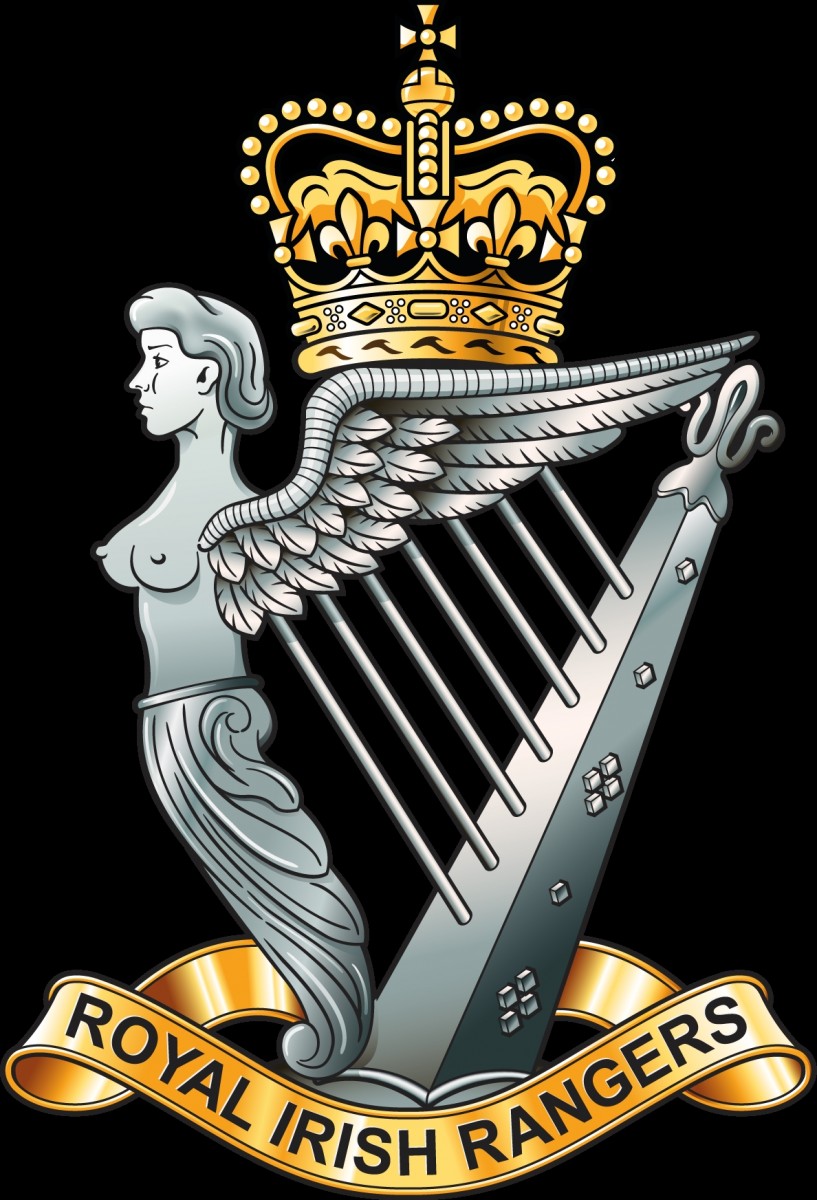 The 2nd Battalion The Royal Irish Rangers assumed the role of the United Kingdom's Spearhead Battalion in December 1971. Although placed on various 'notice to move' response times the Battalion was allowed to proceed on block leave over Christmas and New Year.
The Duke of Cumberland's army, including Blakeney's Inniskillings to the rear left in the third line, faced 'The Young Pretender's' Jacobite Army on Culloden Muir east of Inverness, Scotland. Remembering the reverses at Falkirk Muir, Cumberland addressed his army saying
'Now I don't suppose there are any men here who are disinclined to fight, but if there be, I beg them in God's name to go, for I would rather face the Highlanders with a thousand resolute men at my back than with ten thousand half-hearted'.
After the Second World War, the Inniskillings served in Cyprus on two occasions.
The 2nd Battalion The Royal Inniskilling Fusiliers served on the island from 1954-1955. Battalion Headquarters was located in Famagusta with one rifle company detached to Nicosia.
The Cyprus Emergency was a campaign by the Greek Cypriot group EOKA* to remove the British from Cyprus and unify the island with Greece; the latter aspiration was known as 'Enosis', in Greek -Ένωσις. The insurgency began on 1 April 1955 and following a series of incidents, the Governor General, Sir John Harding, declared a state of emergency on 26 November 1955.