

Explore Listing
The Transvaal Declaration of Independence was proclaimed at Paardekraal (Krugersdorp) by the Boers leaders Kruger, Joubert and Pretorious on 16 December 1860 and within days attacks on the British began. The Boers attacked the British (94th Regiment) at Bronkhorstspruit on 20 December and later invaded the British colony of Natal. The First Anglo-Boer War, or Transvaal War, continued until 23 March 1881 but was not a war in the general sense as the Boers did not have an army as such and the conflict was between minor forces over a short period.
The First Anglo-Ashanti War was from 1823 to 1831. In 1823, Brigadier-General Sir Charles MacCarthy*, Governor of Sierra Leone and the Gold Coast, leading one of the four columns of his invasion force advanced on the Ashanti kingdom. Unfortunately he was not joined by the other columns before he was attacked by the 10,000-strong Ashanti army on 22 January 1824 on reaching a tributary of the Pra River. He was defeated and killed and his head was taken as a trophy; his skull was used later as the base for a gold rimmed drinking cup by the Ashanti rulers.
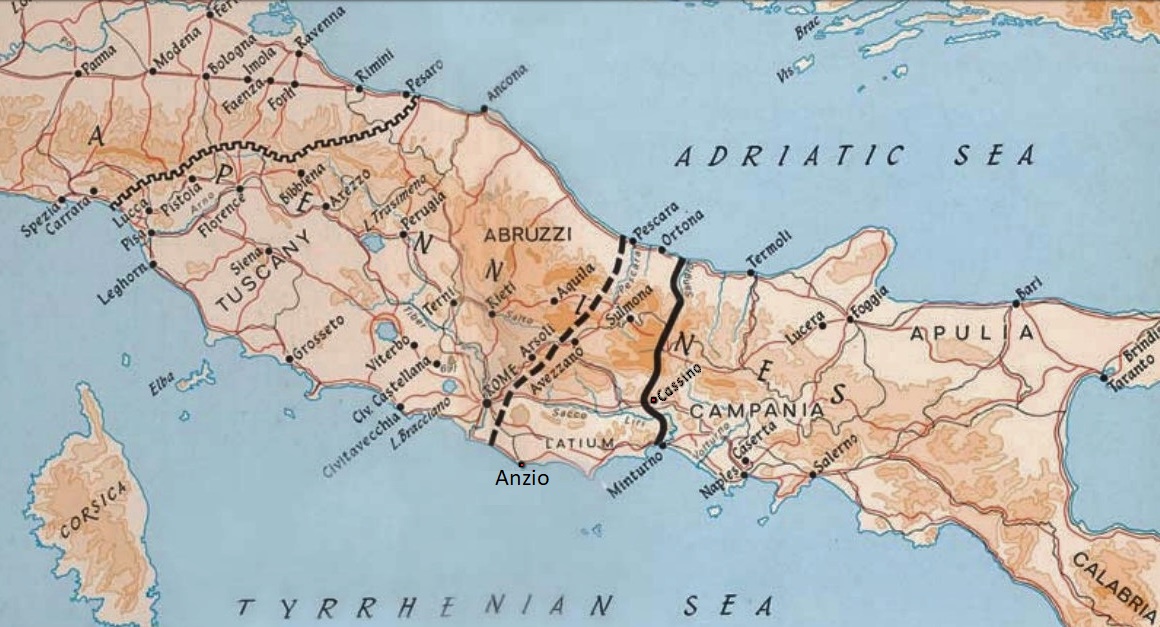 The Allies had conceived a bold plan for an enveloping pincer movement against the German Winter Line in the area better known as the Gustav Line to open the routes to Rome, some 40 miles to the north along Highways 6 and 7. It would consist of a direct assault against the Gustav Line combined with a left-hook amphibious assault against Anzio, all performed by the US Fifth Army commanded by General Mark Clark. His US VI Corps would attack Anzio.
The main battles around Ypres in West Flanders were:
Battle of La Bassée, 10 October - 2 November 1914
Battle of Messines, 12 October - 2 November 1914
Battle of Armentières, 12 October - 2 November 1914
Battle of Langemarck, 19 October - 24 October 1914
Battle of Gheluvelt, 29 October - 31 October 1914
Battle of Nonne Boschen, 11 November 1914
When a patrol from the Gold Coast Regiment was engaged by German-led colonial forces on 7 August 1914 near Lomé, Togoland, Lance Corporal Alhaji Grunshi fired the first British and Empire shot of the Great War. German Togoland surrendered to the British and French on 26 August 1914.
General Sir John Anderson GBE KCB DSO was appointed as the first Colonel Commandant of The Ulster Defence Regiment on 12 November 1969, an appointment he held until 1977.
Brigadier Logan Scott-Bowden DSO OBE MC was the first Commander of The Ulster Defence Regiment.
The Regimental newspaper 'The Irish Ranger' was first produced at the Depot in St Patrick's Barracks Ballymena on 1 October 1972 and was edited by Major J O Cave, the Divisional Recruiting Officer.
The very first copies of the SUN newspaper were sold on Tuesday 15 September 1964 and on page 9 there was an article concerning a red setter called Juliet, Major Derek Archer, and four Irish dancers about to embark on a British Army musical tour of the USA.
Major G D Archer was the Second in Command of the tour. The 1964 USA Tour was performed by the Massed Bands, Drums, Pipes and Bugles of The North Irish Brigade, and a troupe of Irish Dancers from the WRAC (Womens Royal Army Corps).
At the beginning of the Advance in Flanders on 24 August 1918, both the 1st Battalion and the 9th Battalion the Royal Irish Fusiliers had advanced swiftly at 0700 hours to attack across a one-mile front, under a barrage of smoke and shrapnel, to the line of the Haagedoorne-Dranoutre Road short of the town of Bailleul. The town, with its military airfield, had been captured on 15 April 1918, during the German Spring Offensive in the Battle of the Lys.