

Explore Listing
During the so-called French and Indian War, the British America colonies battled the colonies of New France. Each was supported by their British and French military forces and by their Indian Nation allies. The French colonies had a population of some 60,000 settlers while the British colonists numbered some 2 million. The war became part of the Seven Year's War of 1756-63 and matters in North America were also settled under the Treaty of Paris that included France ceding French Canada and Acadia to the British.
Towards the end of 1974, the 5th (Volunteer) Battalion The Royal Irish Rangers (5(V) R IRISH) became corporate members of the Reserve Forces Association and offered to accept four allied officers and NCOs on attachment at their next annual camp. Annual camp in 1975 took place at Westdown Camp, Tilshead on Salisbury Plain. Two French army reserve officers, Lt Col Robert Giroud and Lt Col Gilbert Ginsberger, spent the whole fortnight with the battalion. Adjutant (Sergeant Major) Edmond Lhuissiere joined them for the first week only.
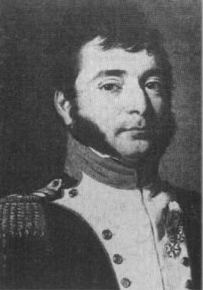 As a postscript to the Battle of Barrosa the following account recorded by the Commanding Officer of the French 2/8th Regiment reveals another aspect of events following the battle. The chef de bataillon, François Vigo-Roussillon (right), described how he was taken prisoner by the 2/87th:
The French Revolutionary Wars was a series of military conflicts from 1792 until 1802, arising from the outcomes of the French Revolution. Following the overthrow of the French monarchy, the French First Republic waged war with Britain, Austria and several other European states; the War of the First Coalition was from 1792–97 and the War of the Second Coalition from 1798–1802.
The weather immediately after New Year 1915 was inclement with heavy rain, frost and gales in succession with hardly a break. The ground was so sodden that troop movement became next to impossible and January's trench work was more difficult than ever. The British were beginning to take over some of the French areas and extending their general line from the Kemmel-Wytschaete road north to St Eloi. A great number of men contracted frost-bite and other ailments. The trenches there were very wet, and the discomfort was extreme.

The Salonika front takes its name from the city of Thessalonika in the Macedonian region of Greece. The Salonika, or Macedonian Campaign, began on 5 October 1915, when elements of the 10th (Irish) Division began to arrive at Salonika along with the French 156th Division.
In the early hours of 18 January 1944, 2nd Inniskillings took part in the crossing of the Garigliano River in Central Italy as a prelude to the capture of the German Gustav Line.
The night attack across the river was fiercely contested by the Germans, and the Inniskillings had over 50 men killed. B Company, commanded by Major John Nixon, was the left forward company.
 The Ottoman retreat from the city on 9 November 1917 meant that General Allenby was able to enter Jerusalem on 11 December 1917. As a sign of respect, he dismounted and then proceeded on foot into the ancient and holy city.
(Image © IWM (Q 12616))
To view footage of his entry, click on General Allenby prepares to enter Jerusalem and then please click on your back browser to return to this site.
James Stuart Steele was born at Templecorran, Ballycarry County Antrim on the 26 October 1894 to Samuel and Rachel Steele. Sadly, his father died of pneumonia in 1896 when James was just over 1 year old. James was educated at the Royal Belfast Academical Institution and Queens University, Belfast where he was in the Officer Training Corps.