

Explore Listing
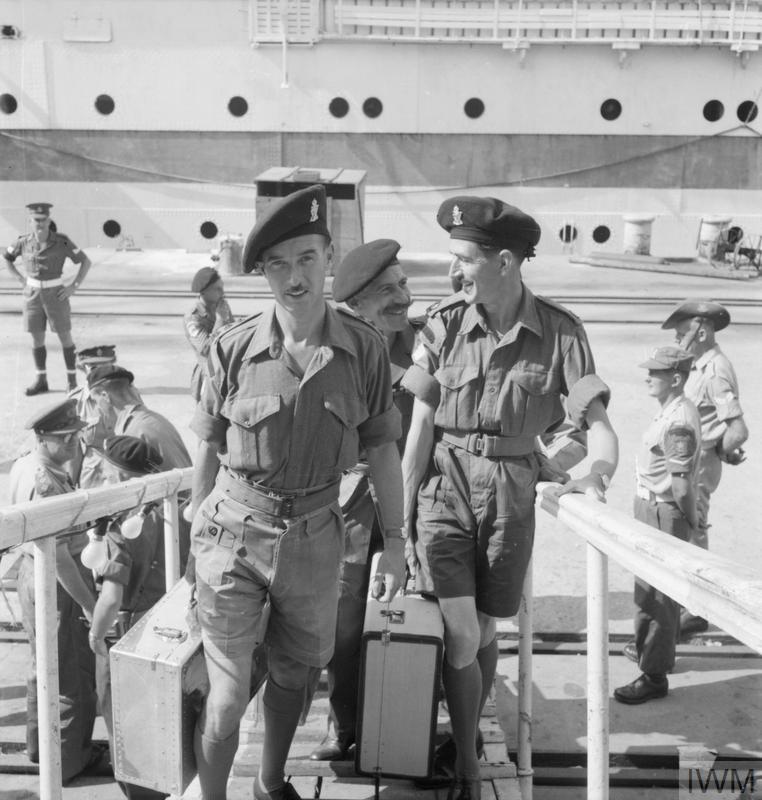 In July 1951, peace talks began at Panmunjom. Static fighting along the 38th parallel continued over the next two years, often in conditions of extreme cold and heat. Commonwealth troops were deployed on a rotational basis, defending hill positions and carrying out patrols.
North Korea invaded South Korea on 25 June 1950, advancing rapidly south and forcing South Korean and American forces into a pocket around the port of Pusan. The United Nations responded quickly, calling for international member support for South Korea. The United States, Great Britain, Australia, Canada, India, New Zealand and South Africa were to respond by sending military forces.
The Korea War Memorial had been removed from the former Regimental Depot, Saint Patrick's Barracks, Ballymena, on closure of the Depot, and was later erected in the grounds of the City Hall, Belfast where it was dedicated in a ceremony on 25 April 2010, the anniversary of the Battle of Imjin.
Please click on The Korean War Memorial to read the story of how the memorial was first raised on a battlefield in Korea and its subsequent journey ending in the grounds of the City Hall, Belfast.
 On the morning of 5 July 1943, the Germans advanced to attack the Red Army at the Kursk salient in what would result in the largest tank battle in history.
Edward Pearce was born in Dublin in or around 1846. This was a significant date in Irish history as it was the year before the Irish Potato Famine, called the ‘Great Hunger’. He was brought up in Portsmouth, Hampshire. His father, Henry Pearce, may have left Ireland to escape the ravages of the famine.
Edward enlisted at Fareham on 31 August 1866 and joined the 108th Regiment of Foot (Madras Infantry), then stationed in Portsmouth. He went to India on draft on 9 March 1868 and joined the regiment in Madras. He returned to Britain in 1876 with the regiment and was posted initially to Colchester. He then served in Portsmouth until 1879 and then on to Preston for a further two years until 1881. The 108th Regiment was then posted to Enniskillen and it was at this time that the 108th Regiment became the 2nd Battalion The Royal Inniskilling Fusiliers under the Childers Reforms of 1881.
Four members of the 6th Battalion The Ulster Defence Regiment, Private Oswell Neely, Private Thomas Harron, Private Ronald Alexander and Private John Roxborough, were killed by a 600lb landmine at Drumquin in County Tyrone, Northern Ireland.
They were in the last Land Rover of a five-vehicle convoy en route to Ballykinler from Omagh. The device left a crater 40 feet wide and 15 feet deep. This was the greatest lost of life in a single incident since the raising of the UDR; it remained so until the killing of another four soldiers in 1990.

During the Peninsular War, the following extract appeared in the Commander's Orders for Spain and Portugal on 19 September 1809:
The last occasion during the Central Indian campaign on which the 3rd Madras (European) Regiment was engaged appears to have been on 29 March 1859, at Imlipani, where the Grenadier Company, commanded by Lieutenant Hunt, led an attack on about 800 rebels who had checked the advance of a detachment of Sikh cavalry. Two volleys and a bayonet charge dispersed the rebels. In April 1859 the Indian (Sepoy) Mutiny was officially declared to be at an end.
Lady Airey, the wife of Lieutenant General Sir Richard Airey, the Governor of Gibraltar, presented a Stand of Colours to the 86th (Royal County Down) Regiment. The old Colours, 'of which but a few shreds remained fluttering from the staff' were trooped and then marched away in slow time to 'Auld Lang Syne'.
The forerunner of the United Nations, the League of Nations was established on 10 January 1920 following the Paris Peace Conference at the end of the First World War. The signed 'Covenant of the League of Nations' charter document had twenty-six articles and an Annex of signatories, all preceded by Part I that stated:
THE HIGH CONTRACTING PARTIES,
IN ORDER TO PROMOTE international co-operation and to achieve international peace and security
-
by the acceptance of obligations not to resort to war,
-
by the prescription of open, just and honourable relations between nations,